

A service business case study is a short, true story about one real job: the problem your customer had, what your team did, why you did it that way, and what changed. It is the most convincing page your website can have, and you already have everything you need to write one.
So why don't you have any?
Why are your best jobs disappearing?
Because nobody owns the story after the work is done.
Think about last week. Your crew nailed a tough job. The customer was thrilled. Somebody snapped a few photos. Then those photos sank into a technician's phone, next to pictures of his dog and his lunch, and the job was never mentioned again.
Meanwhile, a new prospect lands on your website and reads "Quality service you can trust." Every competitor in town says the same thing. Nothing on the page proves it.
That's frustrating, and it isn't your fault. You run a service business, not a publishing company. But it's costing you work, because the moment of decision is happening on your website.
BrightLocal's Local Consumer Review Survey 2026 found that 54% of consumers visit a business's website after reading positive reviews, and 66% keep researching instead of buying right away. Your reviews get people interested. Your website has to close the deal. Case studies are how you close it.
Why do case studies win jobs that slogans can't?
Proof beats promises. A slogan tells buyers you're good. A case study shows them exactly how you handled a problem like theirs.
Google agrees. Its guidance on helpful, people-first content asks whether your content shows first-hand expertise, the kind of expertise "that comes from having actually used a product or service." A real job story is first-hand expertise in its purest form. Nobody else can write it, because nobody else did the work.
AI search works the same way. Tools like ChatGPT, Google's AI Overviews, and Perplexity look for specific, clearly organized facts they can trust and repeat. "We do great work" gives them nothing. "Problem, decision, work, result" gives them a story they can cite. Learn more about how this works in our guide to AI search optimization.
Which jobs should you turn into case studies?
Pick jobs that look like the work you want more of. One good case study about your most profitable service beats ten stories about odd jobs.
A job is a strong candidate when it checks most of these boxes:
- It solves a common problem. Other customers will see themselves in it.
- It has a clear before and after. You can show the change, not just describe it.
- It required a real decision. You chose one approach over another for a good reason.
- The customer is happy and willing. They'll let you share photos and maybe a quote.
- It's work you want more of. Your case studies attract the jobs you feature.
What should you capture before you leave the job site?
Capture the evidence while it still exists. Once the truck pulls away, the "before" is gone forever.

| What to capture | What it looks like | Why it matters |
|---|---|---|
| The problem | What the customer called about, in their words | Buyers search for problems, not services |
| Location | City or area only, never the street address | Builds local relevance and protects privacy |
| Before photos | Wide shot plus close-ups of the problem | Proves the starting point |
| The decision | What options existed and why you chose this one | Shows expertise, not just labor |
| The work | Two or three photos of the crew in action | Shows real people and real care |
| After photos | Same angles as the before photos | Makes the result undeniable |
| The result | What changed, using facts you can verify | Gives buyers and AI something specific |
| Customer words | A short quote or review, with permission | Adds a voice that isn't yours |
Permission comes first. Get the customer's written okay before you use their name, photos, or words. Never show house numbers, license plates, faces, or personal items unless they agree. If you're unsure what your permission form should say, ask your attorney.
How do you take photos that actually sell?
Shoot like you're building evidence, because you are. Good photos do half the selling before anyone reads a word.
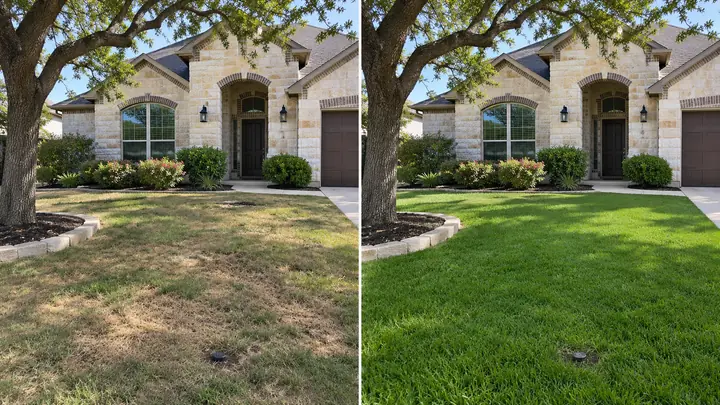
- Match your angles. Take the after photo from the same spot as the before photo.
- Go wide, then close. One shot for context, one for detail.
- Show the crew working. People hire people, not equipment.
- Use daylight. Turn on lights, open blinds, and skip the flash.
- Clean the frame. Move trash cans, tools, and clutter out of the shot.
- Shoot horizontal and vertical. Horizontal for your website, vertical for social media.
What is the simplest case study structure that works?
Use the same five parts every time. A repeatable structure makes case studies faster to write and easier to read.
- A headline that names the result. Lead with the outcome, not the service.
- The problem. What was wrong, and how it affected the customer.
- The decision. What options you considered and why you chose this one.
- The work. What your team did, in plain language, with photos.
- The result. What changed, plus the customer's own words if you have them.
Close every case study with one clear next step, like "Dealing with the same problem? Call us." Don't make a ready buyer hunt for your phone number.
What does a strong case study look like?
The decision is where you win. Here's an illustration (not a real client) of what that looks like.
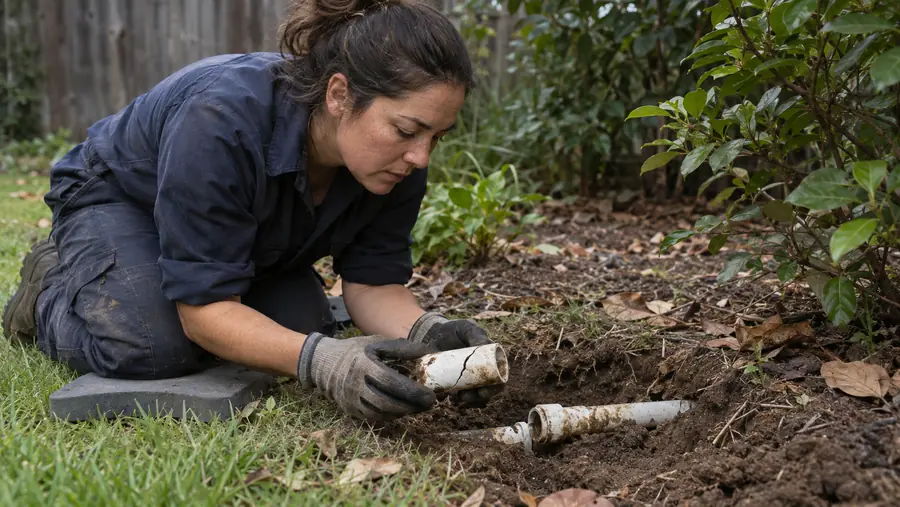
A homeowner calls about brown patches in a lawn that gets watered every day. The quick fix is to turn up the run time. Instead, your technician walks the system and finds mismatched sprinkler heads in one zone, so some areas get soaked while others stay dry. You lay out two options: replace the entire system, or swap the mismatched heads and rebalance that zone. You recommend the smaller fix because the rest of the system is in good shape. The lawn evens out, and the customer keeps the money a full replacement would have cost.
Notice what that story proves. You diagnose before you sell, and you don't upsell when you don't need to. No slogan says that as well.
Where should your case studies live?
Give each case study its own page on your website, then link to it everywhere it helps a buyer decide.
- Its own page. One job, one page, one clear headline. That's what search engines can rank and AI tools can cite.
- The matching service page. Put the case study right where buyers are comparing options. This is a big part of strong local SEO.
- Your results page. Keep every story in one place, like our own client case studies.
- Your Google Business Profile, social media, and email. Share the photos and link back to the full story.
Want to see this in action? Read how All Star Insulation reached the #1 spot on Google Maps. Real numbers, real decisions, real results.
Who should own the case study process?
Somebody has to own it, or it won't happen. Split the job into three small roles:
- Your technician captures photos and notes on site using the checklist below. Five minutes, tops.
- Your office manager gets written permission and asks the customer for a quote or review.
- One writer turns the notes into a published case study. That can be you or a partner.
Start with one case study a month. That's twelve stories a year that sell for you around the clock and never call in sick.
Case study capture checklist
- Customer's problem, in their words
- City or service area
- Wide and close-up before photos
- Options considered and why you chose this one
- Two or three photos of the work in progress
- After photos from the same angles
- The result, using facts you can verify
- Written permission to share photos, name, and words
- Customer quote or review (optional but powerful)
Don't want to write these yourself?
You don't have to. Your team captures the job. We turn it into a polished, search-ready case study.
At Revolution Web Studios, we've helped service businesses grow online since 2006. Our content marketing service turns your raw photos and notes into case study pages built for Google and AI search, then puts them where buyers actually decide. For a done-for-you system that includes content, SEO, and lead tracking, look at our Lead Growth Engines.
No pressure and no long pitch. Start with one finished job, and we'll show you what it can become.
Frequently Asked Questions
What is a service business case study?
A service business case study is a short, true story about one completed job. It explains the customer's problem, what you did, why you chose that approach, and what changed. It works as proof that you can solve the same problem for the next customer.
How long should a case study be?
Long enough to tell the whole story, and no longer. Most service case studies work well at about 400 to 800 words with plenty of photos. If the problem, decision, work, and result are all clear, it's long enough.
Do I need permission from my customer?
Yes. Get written permission before you publish a customer's name, photos, property details, or words. If they say no, you can often still share the story with no names and no identifying details. When in doubt, ask your attorney what your permission form should say.
What if the job didn't produce impressive numbers?
Use the results you can see and verify. "The lawn is green again" or "the leak stopped" is real proof. Never invent or round up numbers. A believable story beats an inflated one every time.
Do case studies help with SEO and AI search?
They can. Case studies give search engines and AI tools specific, first-hand content tied to real services and real locations, which is the kind of content Google says it wants to reward. They also give buyers a reason to stay on your site and contact you.
How many case studies should I publish?
Start with one a month. Consistency beats volume. After a year, you'll have a library of proof for every major service you offer.
Your next great case study is already finished. Let's put it to work.
You did the hard part. The job is done, and the customer is happy. Now let that story bring in the next one.
Call us at 254.902.5254, email info@revolutionwebstudios.com, or book your free strategy session. Bring your best recent job, and we'll show you how to turn it into your hardest-working salesperson.

Founder, CEO & Digital Growth Strategist
Jeremy founded Revolution Web Studios in 2006, with digital growth experience going back to 1997. He builds Lead Growth Engines that help businesses get found, build trust, and generate qualified leads.