

Your website can rank number one on Google and still lose. That is not a typo, and it is not fear mongering. It is what is actually happening to businesses right now, and most owners have no idea it is already underway.
For years, the goal was simple. Rank high, get the click, win the customer. That playbook built entire industries, including the one Revolution Web Studios operates in. But something fundamental has shifted in how people search, and it is happening faster than most business owners can track.
What Is Actually Changing in Search Right Now
The short answer: people are asking AI tools for answers instead of clicking through a list of websites, and when Google or ChatGPT gives them a direct answer, most of them never visit a website at all.
This is not a small shift. ChatGPT reached 900 million weekly active users by February 2026, more than double the 400 million it had just one year earlier. Google's AI Mode hit 75 million daily active users and over 100 million monthly active users, a fourfold increase since its launch in May 2025. These are not early adopters experimenting with a novelty. This is the new default way a huge and growing share of the population looks things up.
And when an AI Overview shows up at the top of a Google search, the business that used to own the number one spot now gets 58 percent fewer clicks than it did before AI Overviews existed. Pew Research found that only 8 percent of users click through to a traditional website result when an AI Overview is present, compared to 15 percent when there is no Overview at all. Zoom out further and the picture gets even starker. Across all Google searches, 58.5 percent now end without a single click. On mobile, that number climbs to 77 percent. For searches where an AI Overview appears, 83 percent end with no click whatsoever.
Read that again. In the majority of searches happening on Google right now, nobody clicks anything. The answer is just handed to them.
Why This Hits Harder Than You Think
If you have noticed your website traffic flattening or your leads getting harder to come by, even though your rankings look fine, this is very likely why. It is not that your SEO stopped working. It is that the thing SEO was built to win, the click, is disappearing as the prize itself.
That is a frustrating place to be. You did the work. You built the website, wrote the content, earned the reviews, and climbed the rankings the way you were told to. And now the ground is shifting under a strategy that was never explained to you as temporary.
Here is the part that should change how you feel about it. This is not a sign you did something wrong. It is a sign the entire industry is in the middle of the biggest change to search behavior since Google itself became a verb. Businesses that adapt now will spend the next several years ahead of the ones that do not even realize the shift happened.
 Customers are increasingly getting their answer straight from an AI assistant instead of clicking through to a website.
What Showing Up in AI Search Actually Requires
A website built only to rank in a list of blue links is not automatically built to be recommended by an AI engine. Those are related skills, but they are not the same skill, and the businesses treating them as identical are the ones falling behind fastest.
AI tools like ChatGPT, Google AI Mode, and Perplexity decide who to recommend based on a specific set of signals: how complete and active your Google Business Profile is, how recent and detailed your reviews are, how specifically your website content answers the real questions your customers are asking, how consistent your business information is across the internet, and whether other sources around the web reference and vouch for you. None of that happens by accident, and none of it is covered by simply having a website that used to rank well under the old rules.
This is also, strangely, good news if you move now. A Goodfirms industry survey found that while 43 percent of marketers now call AI search optimization a core strategy for 2026, only 14 percent are actually tracking whether their business shows up in AI-generated answers. Almost everyone agrees this matters. Almost nobody is watching it. That gap will not stay open forever, but right now, it is wide enough to build a real advantage through.
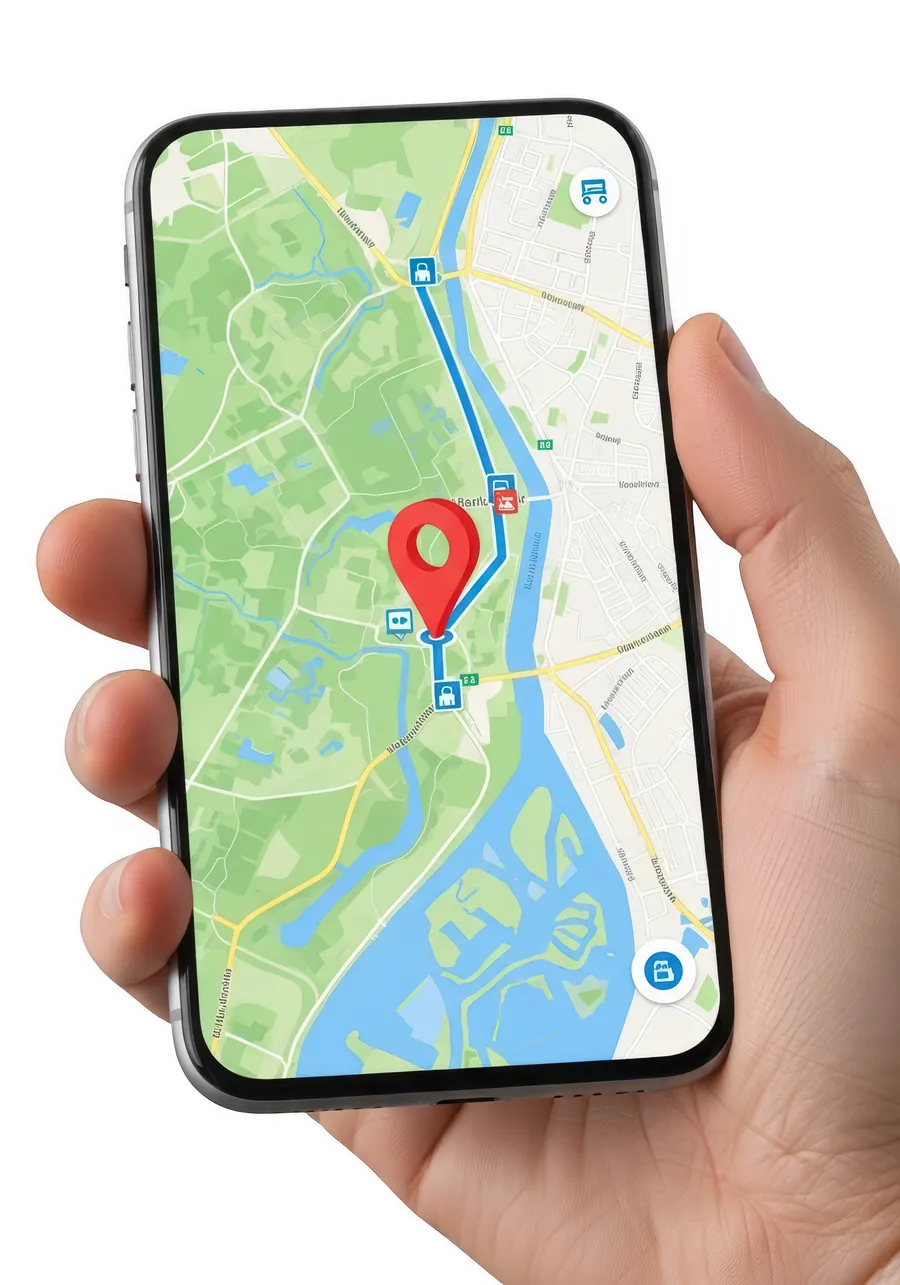 A complete, active Google Business Profile is the single most referenced source AI tools use to verify and recommend a local business.
What To Actually Do About It
You do not need to overhaul everything you have built. You need to add the specific layer that AI search tools are actually looking for, on top of the foundation you already have.
Start with your Google Business Profile. Fill in every field, upload photos regularly, post updates at least twice a month, and respond to every review. This is the single most referenced source AI tools use to verify and recommend a local business.
Build a steady flow of fresh, specific reviews. AI tools weight recency heavily, so a handful of reviews trickling in every few months does less for you than a consistent weekly pattern, even at a smaller volume.
Create content that answers the exact questions your customers ask before they ever contact you. Generic service pages tell an AI engine very little. Specific, direct answers to real questions give it something concrete to pull from and repeat back to someone searching.
Clean up your citations. Your business name, address, and phone number need to match exactly across every directory and platform where your business appears. Inconsistencies quietly undermine the trust signals AI engines rely on.
Get referenced beyond your own website. A mention in a local publication, an industry directory, or a chamber of commerce listing acts as a third party vouching for you, and AI engines treat that kind of external validation as more credible than anything you say about yourself.
 Showing up in AI search is not an accident. It takes a deliberate plan built around the specific signals AI tools actually look for.
See Where You Stand Right Now
You do not need any special tool to check this. Open ChatGPT or Google AI Mode and type the question your ideal customer would actually type, something like "who is the best [your service] in [your city]."
If your business shows up, you are already building the right kind of visibility. If it does not, or a competitor shows up in your place, that is not a reason to panic. It is simply information, and it points directly at the work in front of you.
The Window Will Not Stay Open
Every major shift in how people search has rewarded the businesses that moved early and quietly disadvantaged the ones that waited to see what would happen. The businesses that built strong Google presences in the 2010s dominated their markets for years afterward. The same pattern is playing out again right now, except this time the shift is bigger and it is moving faster.
The click is not coming back the way it used to work. The businesses that figure out how to earn the AI recommendation, instead of just the search ranking, are the ones who will be found first, called first, and chosen first for years to come.
If you want an honest look at where your business actually stands in AI search today, and a clear plan for closing the gap, we would like to show you exactly what that looks like.
Schedule a free strategy session with Revolution Web Studios and we will walk you through where you stand right now and exactly what it would take to be the answer AI gives your next customer.
Frequently Asked Questions
What does "the click is disappearing" actually mean?
It means a growing share of Google and AI searches now end with the person getting their answer directly from the search results or an AI chat, without ever clicking through to a website. Current data shows 58.5 percent of Google searches end without a click, rising to 83 percent when an AI Overview is shown, so the website click you used to count on is becoming the exception rather than the rule.
Does this mean SEO is dead?
No, but it means SEO alone is no longer enough. Traditional SEO still matters for the searches that do result in a click, but a parallel skill set, optimizing for AI search visibility, is now required to be recommended in the growing number of searches where an AI tool answers the question directly instead of showing a list of links.
How is AI search optimization different from regular SEO?
Regular SEO focuses on ranking a webpage in a list of results. AI search optimization focuses on becoming the business an AI tool chooses to recommend by name, which depends more heavily on your Google Business Profile completeness, review recency and quality, local citation consistency, and how directly your content answers real customer questions.
How long does it take to start showing up in AI search results?
It varies by starting point. Businesses that already have a reasonably strong Google Business Profile and review history can see meaningful movement within two to four months of focused work. Businesses starting from a thin or inconsistent online presence should expect six to nine months of consistent effort to build competitive visibility.
Can a small or local business really compete with larger companies in AI search?
Yes, and in some ways AI search levels the playing field. A smaller business with a fully optimized Google Business Profile, strong recent reviews, and clear local relevance can outperform a larger company with a fragmented or outdated online presence, because AI tools weight trust and specificity more heavily than company size.
What is the single most important thing to fix first?
For almost every business, it is the Google Business Profile. It is the asset AI tools reference most often to verify a business, understand what it offers, and assess its reputation, and an incomplete or inactive profile is one of the fastest ways to be left out of AI-generated recommendations entirely.
What is Revolution Web Studios and how does this relate to what you do?
Revolution Web Studios is a digital growth agency based in Temple, Texas. We build Lead Growth Engines for businesses across Central Texas and beyond, combining website design, AI search optimization, SEO, and reputation management into one connected system built for exactly the shift described in this article. You can see real examples of this work in our case studies.

Founder, CEO & Digital Growth Strategist
Jeremy founded Revolution Web Studios in 2006, with digital growth experience going back to 1997. He builds Lead Growth Engines that help businesses get found, build trust, and generate qualified leads.